Showing posts with label Short story. Show all posts

Saturday, May 18, 2019

Short Story: Thelma, Louise, and Ginger

By Kamran Nayeri, May 17, 2019
Thelma, Louise, and Ginger with their grown up offspring. Photo: Kamran Nayeri

Wild  turkeys have been a part of my life since about eight years ago when I settled in northern California, outside of Sebastopol, a town of 8,000, in an agricultural-residential location.  The primary reason for choosing the house I live in was that it has a Lake Tahoe style design—essentially a 1,700 square-foot wooden cabin much of it in one large room with large picture windows that give the feeling of being outside while living inside. The large room faces a meadow that sits on a low grade slope leading to a creek that fills with runoff rain water in the rainy season. A narrow forested land sits on both sides of the creek with different species of tree, mostly native. But the tallest tree is a eucalyptus.

The forested area and the meadow provide good habitat for a range of wildlife.  The combination of the forested land and the meadow is ideal for bobcats. Although shy, I have seen them a few time—always solitary. Once I was able to photograph one who was preoccupied with hunting but turned around and looked into the camera.

The house sits  on two acres of land with mature tall pine and redwood trees on the northeastern and northern sides. Ever since I arrived I worked on a multi-year plan to turn the land more into a wildlife habitat and began to provide seed feeders for birds and a nectar feeder for humming birds. Building a 10,000-gallon pond with a waterfall which I populated with water plants and rescued fish invited wildlife from frogs to dragonflies as well as fish eating birds like herons and egrets and insect eating birds and in early spring mallard ducks.  A few times, the little daughter of my neighbor brought me turtles she found in the dry creek or on the road.  As soon as she let them loose by the pond they jumped in making me believe that they were happy finding a nice home. Later, I learned that they really will never stay.  A biologist friend also advised me that turtles that seem to be "lost" are probably nesting nearby where they are found. The best thing to do is to leave them alone and if they are in harms way helped them by putting them somewhere safe nearby.

I also spread seeds on the ground near the patio facing the meadow and the forested land. All kinds of birds come to eat seeds, from northern flickers to mourning doves, to  quails, and sparrows.  There is a feeder on the window glass filled with millet and sunflower seeds that brings finches and other small birds.

Over the past few years the news has spread in the birds community in the neighborhood that La casa de los gatos (this the name of the place I live in) is nice place to hang out and provides a fine menu on a daily basis.

While the invitation has been to all wildlife in the area, wild turkeys have come the dominant bird that visits here.  Not only there is ample acreage to roam around to eat nuts, seeds, grasses, and insect they like, there is also a buffet of seeds spread on a regular basis in a safe and relaxed place.  An additional benefit for those who decide to stay around is the ample roosting places atop the 60-foot high pine trees. In fact, when I had a professional company  to prune the pine trees they left on my request a few branches in each pine tree that were cleared of leaves and smaller branches to provide ample room for turkey to land on, something like a runway for wild turkeys that fly similar to airplane. Before dark, they gather near the pine trees and one by one run a few feet to take off and land on a lower branch of the tree and them make their way higher by flying up short distances.

The mating season
Wild turkeys are most active during their mating season, approximately from sometimes in February to sometimes in early June.  However, the season depends on the climate and the length of the day. The warmer the weather and the longer the day there would be more sex hormones in the turkey and there is more opportunity for the birds to mate (unlike humans wild turkeys do not date or mate at night).

Most of the year, wild turkeys live in sex-segregated flocks.  This happens as young male turkeys leave the flock of their mother and make their own flock.  Their mother and female siblings remain to make an all female flock.

During the mating season, the neighborhood male and female flocks converge. Dominant male turkeys gobble and strut while the females and some of the males who are not in the game of finding a mate spend their time eating.  From all appearances, the strutting male turkeys seem to be wasting their time. Females almost always ignore them.  But every once in a while some of the strutting males get lucky and a female who is receptive chooses one of them and crouches before him.  The lucky male then mounts her and for about 10 minutes it appears that he is using his feet to massage her back while keeping his balance. The female is largely covered by the larger male, only her head and neck showing from under his body.  At the magic moment copulation occurs which lasts less than a minute (that is why male turkeys are sometimes called "one minute wonder!"). As soon as that is over, the male leaves the female and gets back to strutting and the female gets back on her legs, flops her wings to get her plumage back in order, and begin to eat more seeds. The couple never talk to each other again! Meanwhile, the rest of the flock or any other bystanders (like myself) continue doing what they were doing (When asked one turkey replied: "What is the big deal?").

Nesting
The prospective mother turkey breaks away from her flock and begins searching for a good nest site which would be out of view of predators but gives her a vantage point to look out for them. When it is the time, if the chosen nesting ground is not a depression in the ground, she shallowly scratches it to become a depression. In a two week period she lays 10-12 large eggs. Continuous incubation begins when the last egg is laid.  The mother turkey will only leave for a short period to feed and may remain on the nest for several consecutive days at a time.

Eggs will be incubated for 26-28 days. The mother turkey sits quietly and moves about every hour to turn and reposition the eggs. Hatching begins with pipping - the poult rotating within the shell, chipping a complete break around the large end of the egg. The mother turkey make soft clucks in response to begin to imprint the poults. Imprinting is a special form of learning which facilitates the rapid social development of the poults into adults. Damp poults free themselves but dry quickly so they can follow their mother away from the nest within 12-24 hours after hatching.

Poults 

In their first day in the landscape, poults learn to respond to the mother turkey’s putt or alarm call before leaving the nest area and will respond by freezing or running to hide beneath the mother if she sounds the alarm call.  Poults learn within hours to mimic their mother’s behavior and peck at food items.  By the second day, they perform most of what an adult turkey does in their feeding, movement and grooming behavior.  In one week, they dust like their mother and in two weeks they can fly short distances.  By the third week, they can fly up the trees to roost.  If a poult reaches six weeks of age there is a good likelihood that it will reach adulthood. By the fourteenth week, male and female poults can be distinguished. By the fall, the pecking order among the siblings is established and by winter they all have reached their full size, and ready to enter the social organization of the surrounding population. That is also when male offsrpings leave their mother's flock to form their own leaving behind an all female flock.

Thelma
It is still May and I see single, secretive female turkeys that step out of the meadow and march to the feeding area by the patio and begin to eat.  I suspect these solitary females are expecting mothers looking for a nesting site or are nesting.  Sometimes, I recognize the bird and always I look forward to seeing them with their new born poults.  


Last July, I got to know Thelma, an older and bigger female, who looked strong and walked with grace and confidence. One day, Thelma returned with only one poult who she kept very close to her.

Louise
Soon after another mother turkey attracted my attention largely because she just showed up with her four poults. I named her Louise.   She too was a dedicated mother.  But she still lost a poult.  

Once Thelma and Louise met during feeding here, they began to hang out together.  Soon their poults also began to forage together as if they were brothers and sisters! 

Thelma and Louise had their routine. One was to meditate sitting at the corner of the landscape cleaning and fixing their feathers.  Their poults did the same. Photo: Kamran Nayeri

Ginger
A couple of weeks later, I noticed a smaller, younger mother with four poults. I named her Ginger.  She was far less concerned about her offspring and they tended to stray in different directions before regrouping around their mother.

Ginger ran into Thelma and Louise on one of the days that they all visited here.  They ate seeds together but Thelma and Louise went in one direction and Ginger another.  After a couple of days of meeting each other during feeding occasions, I saw Thelma, Louise, and Ginger foraging together and their poults following them.  Soon, it was Thelma that led the flock and all poults acted as if Thelma was their mother. A new wild turkey flock was formed by three mothers and their offspring. Thelma seemed to command the attention of all in the flock, and without any pecking! 


Ginger when she had four poults.  Photo: Kamran Nayeri

Mother turkeys are brave and dedicated. Wild turkeys fly up tall trees to roost at night for good reason.  A few summer ago, I saw what happened to a large female turkey who became paralyzed due to some disease. She had crouched in the east garden under the Japanese maple tree in the evening unable to move let alone to fly up the trees.  I knew I would find her dead the next morning. Next morning, I found her dead a few steps away from where she had crouched.  A big part of her meaty breast section was missing. I buried her remains under the butterfly bush near where I found her corpse. Mother turkeys who are nesting can be attacked by bobcats, raccoons, or coyotes.  Their eggs can be eaten by crows or raccoons. Poults are easy pick for hawks and owls.

It must be that in the face of all these dangers and because of their social nature, Thelma, Louise, and Ginger pulled their forces together to fend for themselves and their offspring collectively. They opted for communal motherhood. Strength is in unity is not just a union slogan. Communal living is not just a hippie dream. They are necessary for survival of all social animals.

The communal flock prospered as the result.  The poults grew up to become young turkeys. I was able to observe their development until mid-fall when the flock decided to move up the hill where it is warmer.

I will never see Thelma, Louise, or Ginger again. But these turkey mothers taught me a lesson for life.

Friday, April 19, 2019

Short Story: The Proposing (Khāstgari)

By Kamran Nayeri, April 19, 2019
Asghar Nayeri and Nezhat Nikrad on the occasion of my first birthday (Tehran, 1951). 

As far as I can remember my relationship with my father, Asghar, has been strained. The last three years of high school I stopped talking to him altogether.  I began to have “conversations” with him when he and my mother permanently moved to the United States and began to live near me in Northern California in the early 2000s.  I placed the word conversation inside quotation marks because for reasons still unknown to me Asghar has never been able to carry more than exchange of a few words with anyone.  His favorite mode of interaction with others has been comic monologues or reciting poetry for them.  Thus, my attempts at conversation with him took the form of “interviews.” If I could ask him questions that piqued his interest he would respond, often mixing these with his own form of humor which at time was very funny indeed.  To keep this type of interaction going, I asked the same set of questions about events or people in his past and he would respond as if it were the first time I was asking that question.  A favorite topic of ours was how he came to marry my mother.  The following account is from these “conversations” often taking place in presence of my mother who validated Asghar’s recollections. 

As it is common practice in Iran where gender segregation goes back for centuries marriage has been arranged and they took the form of khāstegari (proposing). It usually originates with the (young) man who informs his mother that he is interested in getting married to start a family. Until recently, the prospective wife would not have been involved in khāstegari except perhaps in a passive form. That is, by brinning in tea and sweets for the prospective husband and his entourage so that the potential couple get to discretely glance at each other. 
                                                                     *      *     *

It must have been sometimes in 1948 when Asghar who was 25 years old at the time, asked his mother, Monavar, about a wife. His father, Mohammad Nayeri, was a retired director of the Post Office of Kashan, a small town in the Isfahan provinc, who had married three wives from whom he had seven children. Monavar gave him four boys of whom Asghar was the second oldest. Asghar had recently secured a civilian job in Shahrbani (the Iranian national police) and biology and culture urged him to marry and have his own family. Monavar was delighted to know of her son’s intentions and sent word out to the matriarchs in the extended family and in the neighborhood who had eligible daughters. 


A cousin of Monavar, Legha, responded enthusiastically.  Although her husband, Ibrahim Nikrad, was once a wealthy man in Kermanshah, he had lost everything to his passion for throwing lavish parties for his friends in which much opium and alcohol was consumed as they gambled their property. Ibrahim had two wives with nine children, a son and five daughters from Legha.  After Ibrahim lost his wealth in Kermanshah in the Kurdish region of Iran, he accepted a job as the director of the wheat silo in Mashhad, the capital city of Khorasan province in the northeastern Iran, a job that he lost at the end of the World War II. The penniless family moved to Tehran where the older daughter lived with her husband and Ibrahim hoped to get a job in a bank.  

                                                                    *      *    *


One bright day, Asghar and Monavar dressed up and headed to the Nikrads’ house with some presents for Khātegari.  Legha and Ibrahim welcomed them and after tasting some sweets and drinking some black tea, exchanging pleasantries, Monavar broached the reason for their visit.  Ibrahim congratulated them on the occasion and gently began to quiz Asghar’s ability to support a wife and a family.  He asked Asghar about his job and about his income which was very modest (about 150 tomans a month).  When Ibrahim was satisfied with Asghar’s qualifications, he asked: “Which of my daughters do you wish to be your bride?”  

Asghar sheepishly responded: “Whoever you choose, Sir.”  

Ibrahim protested: “But you must choose as she will be your wife for a lifetime!”  

After a bit of hesitation Asghar replied: “How about the one with the fairest skin?” 

Ibrahim retorted: “That would be Valentine! She is still a student!”

Of course, Asgar had not seen any of the maidens yet. It was Monavar who had seen them and told Asgar about them.  

Asgar sheepishly responded: “I am sorry, Sir! Whoever you say, Sir!”

Calming down, Ibrahim answered: “Nezhat is your best choice. She is the right age and would be a great homemaker.” 

Nezhat was 21 years old at the time. Although three of her sisters finished high school and went on to become teachers, Nezhat did not show an interest in school and had quit after the fifth grade. Instead, she had shown much interest in home making. 

Asgar responded to Ibrahim’s suggestion positively.  They all ate some sweets to celebrate their agreement and wished a happy future for the soon-to-be-wed couple.                                            
                                                                     *       *        *
 

While the khāstagri was in process the Nikrad sisters were in another part of the house trying to figure out what is going on. When they found out about Asghar asking for Nezhat’s hand, the other sisters began to tease her endlessly.  Knowing that she dislikes baldness in men, they told her Asghar was bald!  This made her cry as the other sisters laughed.

Because Nikard family was Westernized and the Nayeri family was not overtly religious, soon Asghar and Nezhat were engaged and allowed to go out together to get to know each other a bit before their wedding. Years ago, my mother told us about their first date.  Asghar arrived at the Nikrad house to take Nezhat for a stroll in the boulevard in the modern northern side of Tehran, now named Keshavarz Boulevard which is very much part of central Tehran.  At the time, there was a creek flowing that divided the boulevard lengthwise with paths for the walking public on both sides of the creek.  

Being a proper young woman, Nezhat tried her best not look at Asghar all the way to the famous pastry shop on the boulevard.  But when the couple stood at the counter ordering cream puffs, suddenly Nezhat saw a handsome young man with a well groomed jet black hair next to her. Her heart was filled with joy—Asghar was not bald! 

The outing ended on a comic note as Asghar who was equally overjoyed by meeting his finance slipped and fell into the creek messing up his fancy suit!  This episode remained one of my mother’s favorite for the rest of her life and every time she told it she had a belly laugh.

                                                             *       *       *


Asghar and Nezhat went on to have four children—two boys and two girls. Despite their humble beginning the family prospered as the Iranian state-dominated capitalist economy experienced a long period of prosperity especially after the quadrupling prices in the early 1970s.  


Eventually, three of their children settled in the U.S. after the defeat of the Iranian revolution by 1982. Asghar and Nezhat who remained in Tehran with Kamiar, the younger son, had nothing more to live for in Iran after he died of thyroid cancer at age 39 in 1994. In 1995, they permanently settled in the United States to be close to their remaining three children.

                                                             *      *     *


While many arranged marriages last a life time, few are happy marriages.  Asghar and Nezhat who remained together until she died at age 86 were not a couple in love.  While my father did not complain about it, my mother resented the fact that he did not marry her for love nor ever came to express such feelings towards her (his rare expression of affection towards her was always in the form of humor).

A year before she died of a massive stroke living in a nursing home in Morage, Califonnia, she and I sat in the patio overlooking the garden. She began to tell me of the bitterness she felt towards my father. Of course, I had heard the same complaints before but listened any way.  I rose up to the edge of my chair when she told me for the first time that my father had raped her on their wedding night and then rolled over and gone to sleep. Her eyes were moist with tears. 

Nezhat died at age 86. At age 95, my father is living in a nursing home not far from the senior housing complex where both of them lived. No longer able to or interested in reciting poetry or telling jokes, he is entirely at the mercy of his caregivers for his daily functions.  

Ibrahim and Legha died before I was born.  He of a massive heart attack and she of cancer that was not diagnosed until it was too late. Mohammad, my paternal grandfather who gave me my name, died when I was still a toddler. Monavor lived with her sons' families, mostly with us, until she died of "old age" in the spring of 1979. 

Nothing remains of the Asghar and Nezhat who looked at each other in the mirror of the pastry shop at Keshavarz Boulevard in Tehran in 1948 with their hearts full of joy and hope for the future.  Only their memories in my mind and in the mind of some of those who have known them. As our generation follows those who went before us, there will be nothing left of their memories bitter or sweet.

Tuesday, June 20, 2017

Farewell to My Mooshi

By Kamran Nayeri, November 13, 2016


Thus shall ye think of all this fleeting world:
A star at dawn, a bubble in a stream,
A flash of lightening in a summer cloud,
A flickering lamp, a phantom, and a dream.
—Diamond Sutra, ca. fourth century CE

My Mooshi was euthanized on Friday, November 4.  She took her last breath at about 10:25 a.m.  It was a warm sunny morning, the kind she would have loved to enjoy sitting in her favorite spot in the garden between the miscanthus grass and deer grass.  

The process was relatively anxiety free for Mooshi. As with each examination, she laid on the examination table.  Leaning over her, I held her in my arms to hug, kiss and comfort (and to comfort me). She ate one or two pieces of cat treats.  She was then given an injection of a sedative under the skin of her upper back.  Within minutes she became sleepy.  Then the fur from her back leg was shaved off to expose a vein and some sedative was rubbed on the exposed vein to make it numb. Finally, she was injected in the exposed vein with a dose of a drug that stopped her heart in a few seconds.  I did not see any of this as I was sobbing and holding on to her as if for eternity.  I felt no sign of unease from Mooshi.  She said nothing and did not move. After I was tapped on the shoulder I raised my head to look at Mooshi who still was laying there with her eyes half open. For a moment I thought she was still alive. Alas, her life-force was gone. There laid her beautiful body, those green eyes, colorful fur, gorgeous face lifeless.  I realized that my Mooshi is gone forever. That I must carry on without her beautiful presence in my life.

I buried Mooshi under the redwood trees next to where I had laid Lulu to rest on February 13.  When I placed her body inside her burial site and picked up some soil to spread on it, it smelled like the earth; that is the smell of Mooshi's coat that I always adored. 

*     *     *
Life and death have puzzled humanity for tens of thousands of years.  Each of us confront them according to our own understanding.  Mine is rooted in science that understands life as an “emergent property” requiring energy flows to sustain and thrive. In this view, death is the negation of life when an organism loses it ability to generate or process this vital energy flow.  After death organisms disintegrate into their constituent elementary chemical compounds. These in turn may become parts of a new living organism or energy flows that are necessary for sustaining them. In this sense, it is true that part of us will become part of one or more living organisms.  However, this is simply a transfer of matter and energy in the constant recycling of living organisms. There is neither a “grand design” nor a non-material “soul” apart from the emergent property of individual organism when it is alive. None of this denies the magic of life and the intrinsic value of each individual being.  To the contrary: imagine the complexity of the conditions that have been necessary for the emergence of the first living organisms on Earth 3.8 billion years ago and complex of conditions necessary for the emergence of more complex forms of life since.  

*     *    *
There has never been and there will never be another Mooshi.  Just like any other being, she was the product of her unique circumstances.  Mooshi was probably born in 2000 near the Anna Head Buildingsof the University of California, Berkeley, between Channing Way and Haste, north of Telegraph Avenue.  Legend has it that she was as part of a litter and her mother and siblings all perished soon after her birth.  The campus Animal Control trapped, spayed and released Mooshi back into the same location.  If this story is true it may explain Mooshi’s feisty personality.  It took me her life time to be able to secure enough of her trust to pick her up and hold her in my arms.  And this was made possible in part due to Mooshi’s increasing dependence on me for her daily functions as she became practically paralyzed in her back legs in the last year of her life.

If my account of her birth date is correct (and I am not at all sure that it is) Mooshi lived about 16 years.  She spent her life in almost equal parts in three locations.  From 2000-2006, she lived as a feral cat in various spots under the Anna Head buildings in Berkeley.  When I had to move to a new job at the UC Office of the President in Oakland, with great difficulty which took months I worked to  trap Mooshi and took her to my Chelton Drive home in Monclair neighborhood of Oakland. She lived there from March 7, 2006 to August 20, 2011.  From August 20, 2011 to November 4, 2016 Mooshi lived in our new home on Darby Road in Sebastopol.   
*      *     *
Mooshi got her name because one morning I found her at the Survey Research Center’s parking lot with a disappearing mouse tail in her mouth. “Moosh” is “mouse” in Farsi and Mooshi was to denote a mouser. Those early days Mooshi was bursting with energy.  She climbed all kinds of places including the metal mesh fence separating the parking lot from a childcare center and even the Anna Head building itself which she climbed to the top (giving me a minor heart attack in the process).  She was a very smart. In cold winter mornings in Berkeley, she sat on the hood of the recently arrived cars to warm up. Being raised in a parking lot made her car and people smart. She was not afraid of them but she was weary of them getting too close.  Most evenings she sat on the balcony of the Survey Research Center building observing people in cars leaving for the night.  To me it was a heart break each day to leave Mooshi behind to go home for the night so I asked her each time: “Do you want to go home with me?”  Because of Mooshi, I went to work seven days a week--to ensure she eats well and to have company. 

In Montclair, Mooshi continued her habit of watching the world go by as she sat on the driveway from dusk until the bed time (unless she was hungry and came in early for food).  Often I had to call to get her inside for the night.  Mooshi was used to seeing urban wildlife like raccoons and skunks.  When Rocky the mother raccoon and her four offsprings made a habit of stopping by to eat leftover cat food and wash their paws in their water bowl, Mooshi liked to watch them.  

In Sebastopol, Mooshi continued these habits except here I worried about wildlife like coyotes she was not familiar with.  But she was very cautious and stayed close to home.  Mooshi enjoyed the acreage and the rich rodent life that goes with it.  She climbed trees and when the garden took shape she enjoyed taking naps there in the warmth of the sun. 

In Montclair, initially Mooshi shared the house with Nuppy, a large, muscular, tomcat who was a menace to all cats. We had partitioned the lower floor so Nuppy could not beat up Mooshi.  On occasions that Nuppy managed to jumped over Mooshi stood her grounds as best as she could (she was half the size of Nuppy).  After Nuppy’s death in May 2008, Bogie, a tuxedo male cat who had lived in the neighborhood for years came inside the house.  Even before Nuppy died we began feeding George, an unfortunate orange male feral cat who found love only in the last two and half years of his life. Then Fluffy showed up—a young female orange cat that had no teeth. Fluffy hanged out with George and came into the house at the time that Mooshi and I left for Sebastopol.  

In Sebastopol, Mooshi shared the house with Sayda, an older emotionally and physically scared female cat from the feral cat colony I found on Darby Road who also found love only in the last three years of her life.  A little later, Sunny, a younger docile female orange cat, who I found under the mailboxes by the bridge over the Draby Road creek around Christmas of 2011, came to live with us.  Eventually Mooshi accepted them.  About a year and half ago, Panther, a large young muscular tomcat that was dumped in the neighborhood and had befriended me finally came into the house.  Mooshi liked Panther but did not like his wild mannerism and Panther stayed away from Mooshi’s path.  In April, 2015, I brought in Lulu who was the surviving member of the Darby Road colony.  In all this, it was clear that Mooshi remained the dominant cat.  As Dr. Baldwin who cared for Mooshi in the last three years of her life wrote in a sympathy note: Mooshi “was  a beautiful kitty with the soul of a lioness.” 

My relationship with Mooshi was based on total and unconditional love. I know that it was so from my side. But Mooshi who was so protective of herself began to trust me from the beginning and this trust grew over the 13 years we knew each other.  I like to think that she loved me like I loved her.  I know this was true at least towards the end.   But as soon as she had a chance to sleep in the same room as me she made sure to spend at least the last hour of the night laying on my legs.  This habit gave me a bad back but it was well worth it.  As she became more disabled Mooshi let me take care of her daily needs including cleaning her butt and sometimes bathing her in a bucket of warm water  to clean her lower body to ward off infections.  When she was bedridden I used to lean over her and kiss her face and body while rubbing her back and belly and she was purring her heart out.  Perhaps this was total and unconditional love on her part. 

*     *     *

I am deeply saddened over Mooshi’s demise and feel the lack of her existence in my life each day.  But to euthanize her was the correct decision to ensure she does not suffer needlessly.  Mooshi suffered from chronic kidney disease, the number one killer of older cats.  As the kidneys fail poison build up in the cat’s body.  Subcutaneous fluids are given to cats with kidney disease to flush out the poison from their bodies. Two days before her death, Mooshi refused taking subcutaneous fluids because it involves inserting a big needle under the skin of her back. And the cat needs to stay put while the fluid empties into their body from a plastic bag.  The needle hurts and many cats don’t like the procedure.  The day before Mooshi’s death the technician reported success in administrating the fluids.  But on the way home Mooshi tried to bite my hand that was patting her back. She had never tried to bite me before. When I got home I found a bloody patch of detached fur on her back.  Mooshi had struggle while being forced to take the fluid. The same day Dr. Baldwin reported the result of Mooshi blood test.  Her kidneys were failing fast.  Based on experience, I knew Mooshi needs daily fluids which she had already rejected.  It was time for us to say goodbye.  

After Mooshi’s euthanasia I thanked Dr. Baldwin telling her how I wished to have a similar treatment available to me when my own time comes.  She agreed with the sentiment.  It is a humane way to end the magic of life when it can no longer be sustained with dignity and pursuit of happiness.

So farewell my little girl Mooshi; I have been truly fortunate to know you for so many years of my life.  May you live in my heart for as long as I breath. 

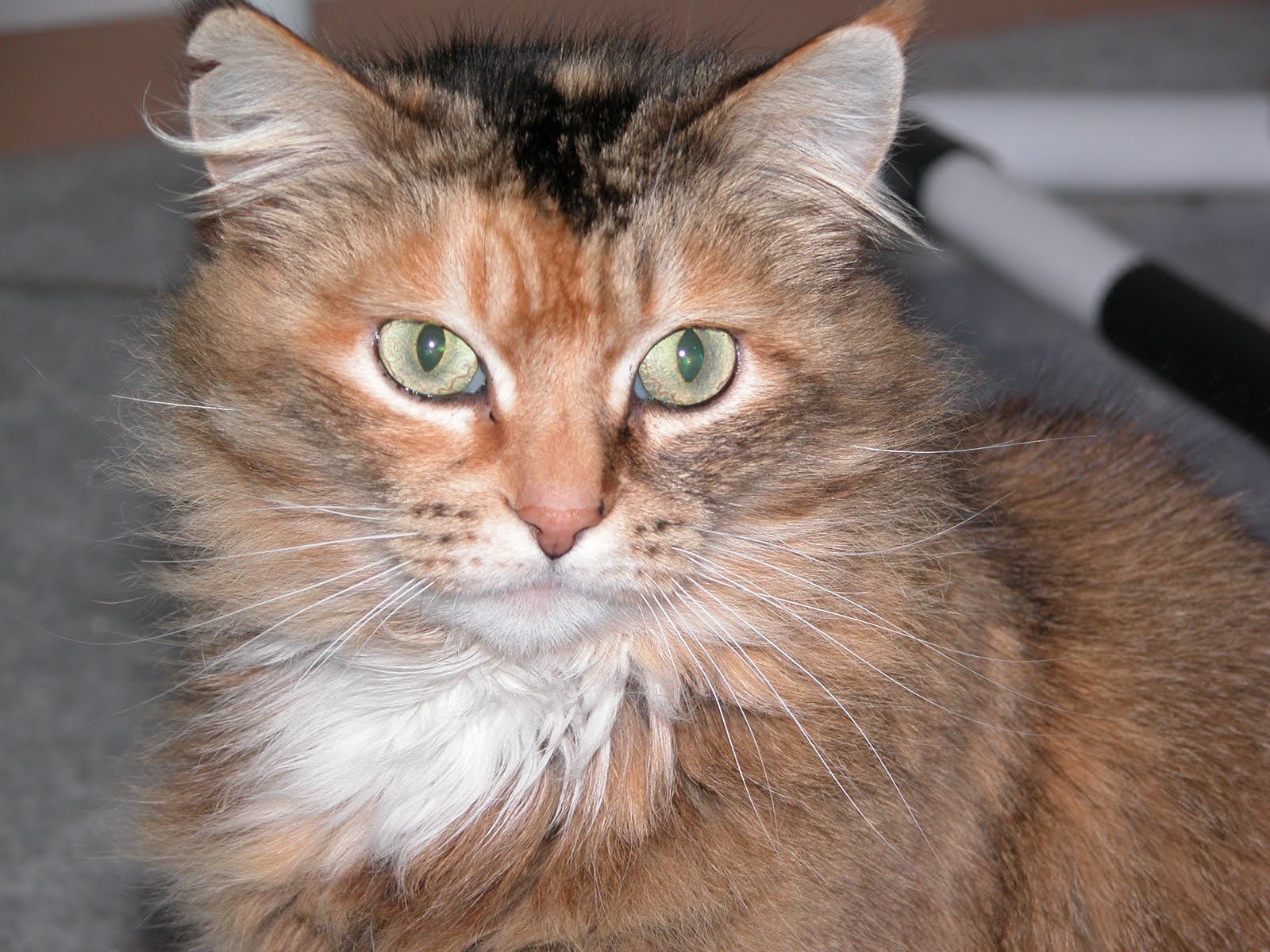
Video clip: Here is a short video clip of Mooshi from the early days at the Survery Research Center to the last day of her life at the veterinarian office in Sebastopol (Thanks to Dr. Baldwin for the last photo). 

The Two Times Zaadi Cried

By Kamran Nayeri, June 6, 2017

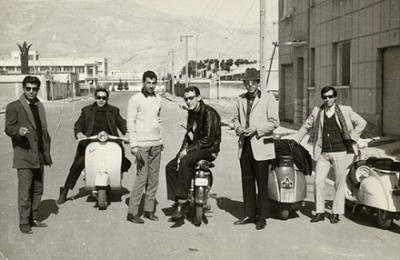
The Iranian rock-'n'-roll group the Black Cats was a favorite of the youth in the 1960s. Photo: Kaveh Farrokh. 


Tehranpars District of Tehran, July 13, 1980

The Execution

It was a warm summer night and I had just sat down with my parents for dinner when I was shocked to see Zaadi on the national TV news!  There could be no mistake. It was Zaadi (pronounced ZĀ-dee) with his imposing face: A squared jaw; big, round, piercing eyes with long eyelashes; broad eyebrows; a boxer nose by birth; large meaty lips that looked at if they were sending off a kiss when he drew on a cigarette; soft, shiny, light brown hair with a dash of it hanging over his forehead.  The long table he was sitting behind hid his shorter than the average muscular body and strong quick legs that he put to good use in high school soccer games. 

I knew immediately this was not good news.  As if to confirm my worse fears a bearded, solemn looking man sitting next to him began to speak: “This is Colonel Farroukhzad Jahangiri who was the leading air force pilot in the Nuzhih coup plot that was nipped in the bud by the ever-alert Islamic Revolution forces…. He and other renegade air force pilots planned to hijack F-4 and F-5 fighter-bomber jets from Nuzhih air force base near Hamedan to attack targets in Tehran and elsewhere in the country. Their primary mission was to attack the residence of Imam Khomeini in Jamaran to martyr the leader of the Islamic Revolution…”  At that point, he turned to Zaadi as if demanding a confirmation and receiving no response, adding: “Did you not think that after such a hideous crime you could never land anywhere in Iran without being lynched by the Muslim Nation?” 

As the camera rolled back to Zaadi’s face I saw a river of tears rushing down his cheeks.   Always being the tough guy, I had only seen him cry once fifteen years earlier when we were in the eleventh grade. 

Within the next few days, on Khomeini’s direct orders many of the military participants in the coup plot were executed.  Zaadi was among the first group that was placed in front of the firing squad.  

*     *     *

The Nuzhih coup plot turned out to be the most significant coup attempt to overthrow the Islamic Republic and to bring back as much as the pre-1979 order to Iran as possible.   Its leaders were drawn from the remnants of the Shah’s armed forces, the pillar of his dictatorial regime.  They reached out to and received support from Shahpour Bakhtiar, the last appointed prime minister of the Shah’s regime who had escaped to Paris just before the February 1979 revolution, to organize a counter-revolutionary group.  As the leader of the very small secular nationalist Iran Party, Bakhtiar enjoyed a measure of respectability in the eyes of a section of the Westernized middle classes that were uncomfortable both with the Shah’s dictatorial rule and with the clerical Islamic Republic regime that followed but most of all feared the anti-capitalist dynamics unleashed by the working masses organizations and mobilizations that led to or ensued from the February 1979 revolution.  But the military leaders of the Nuzhih coup plot harbored no liberal illusions and were outright monarchists.  They wanted Bakhtiar’s support to give their militarist plot a liberal cover to gain as much support as possible.  Once signed onto the coup plot, the “liberal” Bakhtiar reached out to the regional dictators who also feared the Iranian revolution, including in the Saudis and Saddam Hussein.  While there is no hard evidence that the Americans and Israelis were involved—it would be difficult to imagine that they sat outside the most significant coup plot against the Iranian revolution.  

*     *    *

As planned for some time, the morning after I found out about Zaadi's involvement in the coup I flew to Brussels to attend a much anticipated political meeting of the leadership of the Fourth International to discuss the crisis in the Iranian Trotskyist movement.  When the plane circled over Tehran so I see the Alborz mountain range and the snow-capped Damavand mountain, I imagined myself back in that neighborhood in the Narmak district of Tehran where I had met and befriended Zaadi. 


Narmak District of Tehran, Summer of 1964-December 1969

The Ring Leader

I first met Zaadi in the summer of 1964.  After three years living in the southern town of Borazjan my family had returned to our house in Narmak.  Borazjan was a small out of the way town of 5,000 about 70 kilometers north of the port of Bushehr by the Persian Gulf. To reach Borazjan, minibusses and trucks had to navigate treacherous narrow mountainous dirt roads famed for sending many travelers to their death often because of failing brake system.  Borazjan was notable for its prison and its hot and muggy climate.  The 70-year-old prison used to be a caravanserai and it housed prisoners political and non-political often for life.  Prisoners and government employees were sent there for hardship, except the government employees received bonuses for serving in the bad climate. 

The reason my parents became early settlers of Narmak was the 1952 campaign by the nationalist Mohammad Mossadegh’s government to raise funds, including by selling public land to state employees, to resist the British imposed embargo in response to the nationalization the Anglo-Iranian Oil Company.  In August 1953, the CIA and MI6 overthrew Mossadegh’s government and reinstalled Mohammad Reza Shah who ruled as the pro-Western dictator until the 1979 revolution. My father, who was a young civilian employee of Shahrbani (National Police), was offered 600 square meters at four tomans (fifty cents) per square meter, a bargain at the time.  Over the years, I witnessed them borrow and build the house piece by piece. Thus, Narmak, at the time a largely barren area to the northeast of Tehran, named after a small village in the north most part of it, was originally settled by lower and middle-income government employees. 

Zaadi’s father was a colonel in the army who drove a 1957 Chevrolet.  Those days there were very few families that had a car.  Zaadi’s family had the nicest house in the neighborhood that had a large painted iron gate to allow them to park the Chevy inside. Those days, houses were mostly built with brick and mortar surrounded by tall walls and an iron gate for entry.  In part, the high walls were due to Islamic norms to keep women away from the evil eyes of men.  But both the walls and the iron or wooden gates also were built to discourage thieves who occasionally raided homes.  To make up for the arid climate, most homes had a garden and often a small pond that occasionally was populated with goldfish.  

Zaddi had an older brother and sister and a younger sister. His brother worked at the Customs Agency, known for being a good place to pocket bribes. He wore tailor-made stylish two-piece suits, shiny or not shiny shoes depending on the latest fashion, and always wore dark sunglasses. We never saw his eyes.  Zaadi bragged about the wild parties and steamy sex life his brother enjoyed. Zaadi’s older sister was a fine arts student at the Tehran University. I liked her a lot because she treated us as if we were adults and her equal. Zaadi’s younger sister who was also in high school and had blonde hair and very light skin. I never met his mother.  Zaadi himself consciously cultivated a Western persona.  He spoke about the latest European fashion, knew of music bands in England and the U.S. and hummed some of their songs to the rest of us. He turned me on to “rock and roll” music.  Because of his influence, I had my mother buy fustian cloth of latest style for me that I took to the tailor Zaadi recommended to make me a new suit each Noruz.  I also followed Zaadi’s lead in buying my shoes.  When I was a small child a cobbler named Majid who had a tiny shop made my shoes for me. He placed my small feet on a piece of cardboard and with a pencil drew a line around them.  In a week or so he would have my shoes ready for me to try on. Invariably, he had to make minor adjustments and the shoes often had the same style. But they fit me perfectly. By the time I was a teenager, Majid was out of his job as factory made shoes dominated the market.  Many handicrafts were lost after the industrialization wave that began in the 1960s. 

Through Zaadi I met Ebbi and Bahman who both lived on the same street as him.  Ebbi was thin and tall but showed an unfortunate early thinning of hair at the top of his skull of which he was embarrassed. Zaadi called him Ebbi the Bald (Ebbi garreh).  Ebbi’s family were traditional Muslims. His father who I never saw was an old man who worked in the Tehran’s big bazaar, although I never learned about his type of work.  All Ebbi's siblings were grown ups and had left home already.  Ebbi himself was neither traditional nor a practicing Muslim.  He combed his hair after the Beatles’ style except it accentuated his growing baldness.  But he figured it was fashionable and people wouldn’t see his thinning hair as he was so tall. He wore jeans and acted as modern as he could, including by wearing dark sunglasses even when it was getting dark. Perhaps because of Ebbi’s modern ways his mother, an old woman by our standards who he affectionately called Aziz (Dear), intensely disliked us as a bad influence on her son. We all tried our best to avoid Aziz. 

Bahman was short and stocky with closely cut, dense, curly black hair and very bright dark eyes.  Because his family was from Ardabil, Azerbaijan, Zaadi called him Bahman the Turk (Bahman turke).  His father worked in a nearby storefront real estate office with sparse, old furniture.  Bahman was so intimidated by his father that he couldn't leave the house to join the rest of us when he was at home.  Zaadi’s father was also intimidating to him but in a different way.  One day when we were standing by Zaadi’s house and Zaadi was smoking a cigarette his father surprised us. Zaadi placed the still-burningcigarette in the pocket of his jacket as his father exchanged a few words with the rest of us.  By the time he left the cigarette had burned a hole Zaadi’s jacket.  Zaadi called his father the Magnificent Bald (Gareh ba obohat).  He adored him but also feared him. 

Even at age 16, Ebbi and Bahman needed a close shave each day. Zaadi’s beard was mostly on his chin and mine was still too soft and sparse to need attention even though both of us had electric shavers.

Hanging Out

There was not a whole lot for teenage boys to do in Narmak. An arid land, it would turn green in patches when it rained which was not often or when some authority allowed pumping out water from the well in Narmak village to the north.  The water then would flow southwards down the slope that began on the heels of the Alborz mountain range into many trenches in various neighborhoods.  By these occasional streams, planted sycamore seedlings had grown into young trees to provide much-appreciated shade.   Sparse native plants were mostly low to the ground.  Shepherds who took their herd of goats grazing through Narmak partly fed them dumped newspapers due to a lack of enough vegetation. Of birds, sparrows, finches, swallows, doves, pigeons, crows and vultures were common. But there was a paucity of mammals except for rodents and feral dogs and cats.  Insects and occasional butterflies visited, especially in home gardens.  Although Narmak was a planned future district of Tehran, some plots were subdivided by the owners and sold for a profit making for houses of various shapes and size homes scattered among unbuilt plots. Planned squares, circles and streets were yet to be built.  The only paved road was the main one called unimaginatively Simetri (30-meter-wide road) that was carved north to south in the middle of the Narmak connecting it to the paved Tehran-no road that ended in the Fawzieh Circle to the west and the Aab-Ali that tool travelers to mountainside villages that served as summer resort for Tehranis and the northern and eastern providences.  The Circle was named after Princess Fawzia Fuad of Egypt who became the first Queen to the Shah.  Soon, he divorced her for infertility. Red double-decker buses and Mercedes 180, 190 and 220 owner-driven taxicabs carried residents to Fawzieh Circle for one rial for the buses and five rials for the cabs. 

So the four of us spent the summer of 1964 hanging out outside of one our houses where there was shade and access to facilities at home.  Most of our time was spent to pulling each other's legs.  In this, as most other things, Zaadi was the ring leader.  Often, it was the Islamic traditionalism of Ebbi’s family or the Turkish heritage of Bahman’s that Zaadi picked on.  Unbeknown to us, the 1960s and 1970s were the decades of spreading of capitalist modernity in Iran. The peculiar Fars (Persian) chauvinism that was supposed to be its Iranian cultural form served the Pahlavi monarchy that was in conflict with the religious hierarchy and secular socialist ideology.  In 1963, the Shah initiated his White Revolution to undermine his opponents to the left and right.  Ayatollah Khomeini who was a rising cleric became the chief religious opponent of the White Revolution objecting strongly to the proposed women’s right to vote and land reform.  He was roundly defeated and exiled and a peculiar form of capitalist modernization proceeded until 1979.  To provide ideological support for the monarchy, the Pahlavi dynasty had from the beginning relied on Fars chauvinism that still claims Iranians are Persians going back to the Persian empire of  2,500 ago.  Of course, the Persian empire was never purely Persian as it covered a vast territory that included many ethnic and religious groups. Modern Iran has also been a multiethnic, multilingual, and multi-religious country.  Part of the Fars chauvinist campaign was to single out the largest national minority, the Azerbaijanis, for crude jokes, calling them stupid (Turk-e khar).  Because the monarchy had pretentious to nobility, in fact, it was not, there was a disdain for peasants and day laborers from the villages (dahati or ghorbati).  In the 1960s, it was not uncommon for relatively well-off families to have a servant who was typically from the countryside.  Thus, anyone who was not up with the “modern norms” was a dahati, a peasant. Zaadi was the instigator of Fars chauvinism and anti-peasant and anti-day laborer behavior among us.  When the bread man on his bicycle went by Zaadi would call out kooni (faggot) making the bread man think someone is calling him for bread (nooni, the breadman).  When the poor man would stop and look back we turned the other way giggling.  When Zaadi picked on Ebbi or Bahman they played along to fit in better with the prevailing culture.  

We also played games: arm-wrestling, pull-up and push-up competitions, and volleyball.  I was no match for any of them. In fact, in volleyball whichever team had me would serve first as a bonus.  Among fancier games was billiard that Zaadi taught us.  The billiard hall was in an air-conditioned basement with several large billiard tables and a couple of foosball tables. Strangely, while Zaadi was often the best in competitive games and part of his high school soccer team he was sometimes beaten in foosball.   

Another cooler spot to spend the entire day away from home was the privately-owned and operated Zomoroad swimming pool near Tehranpars, an even newer district of Tehran to the east of Narmak.  It was difficult to get to but not for teenage boys who did not mind getting burned by Tehran’s summer sun.  We walked on dirt roads for about an hour to get to the pool and back,  But we joked and carried on, sometimes stopping for an ice cream treat by Half-Hose (Seven Ponds) Circle opposite on the movie house. 

Zaadi was the best swimmer among us. He was the only one who knew how to dive.  I did not dare to jump from the dive perhaps because being myopic and without my glasses, the water seemed to be too far away!  But Bahman was brave and dived often hitting the water surface with his stomach causing a splash.  Still, it was great fun and a great way to spend a hot summer day.  Whatever swimming I know now is due to those early learning-by-doing experiences.  

Of course, we did most things teenage boys do to become a man. Smoking cigarettes was one of them.  The first time I smelled a Winston it was like a perfume.  When Zaadi, Bahman and Ebbi smoked, I felt they were drawing into their lungs the smell of perfume and that made them high.   When I smoked my first cigarette, Zaadi urged me to inhale deeply. That It quickly made me dizzy and sick in the stomach.  But eventually, I got used to the poison.  The reason I and perhaps the rest of the boys smoked was to appeal to the girls by looking more mature of age.  This was most on display when we smoked the most unusual foreign brands, like Camel filterless, in theaters before the movie started or during the intermission.  Going to the movies was a big pastime among modern and younger urban Iranians.  The movie houses themselves looked like the New York Broadway theaters built to convey a sense of elegance. They served sandwiches, pastries, and cold and hot drinks.  People spent about half-an-hour before the movie started and about fifteen minutes during the intermission, talking together, eating, drinking, and smoking.  We also smoked when waiting in line for the city bus to go to school or to come back home to charm the girls.

Zaadi also urged us to drink. One day when we were alone at his house he brought in his father’s Johnny Walker so we could taste it. He then added some water to the bottle to make up for what we had sipped.  We did not have the funds to buy Johnny Walker. One day we all pitched in our pocket money and bought a bottle of Khorshid (Sun), the cheapest aragh, the Iranian raisin vodka. We all got sick drinking it. 

Rock- 'n'-Roll

As I spent my early childhood at home with my mother who listened to the radio while she worked I developed a taste for the popular Iranian music of the 1950s. Zaadi introduced us to “rock-'n'-roll”—or what we called “rock-'n'-roll.” That is, we liked leading  English bands from the Beatles and the Rolling Stones to The Animals and the Yardbirds.  Ebbi and even less so Bahman was as much of a fan. But I fell for it immediately.  My mother, who always responded positively to my wishes, bought me a Teppaz 45 rpm player. Those records had a single song on each side.  The first record I bought had two of the Beatles “Girl” and “No reply.” I had set up the record player with “No reply” side up ready to play and turned the volume up. Each morning when I woke up, I would turn on the record player and the Beatles blasted throughout the house with: "This happened once before. I came to your door. No reply..."  Unsurprisingly this became a source of friction between my parents as my father hated “rock-'n'-roll” especially “No Reply!”

Nonetheless, my room became a gathering place for the boys. My mother was most tolerant of us and as long as we remained relatively quiet and polite my father did not object either.  We also gathered each Saturday night at 9 to listen to the top ten singles of the week on Radio Tehran, a public station.

Zaadi, who knew more English and claimed to have a voice like Eric Bordun, sang along with The House of the Rising Sun and really impressed us.  He also liked to sing along  (I Can't Get No) Satisfaction with Mick Jagger.  

About a year into our friendship two others joined our group. The first was a first-year college student from Arak who attended the Science and Technology College in the northern part of Narmak.  His name was Reza Chegini but Zaadi called him Agha Reza Chegonegi (How is Mr. Reza) or simply ghorbati (someone from the countryside).  Reza never really became a part of our group partly because of the age difference but also perhaps he was intimidated by our chauvinistic behavior. Poor guy even tried to impress us by a trip to Italy from which he returned with a photo taken next to an Italian girl. The other guy was Hossein who was of the same age as us and the only male in his household, as his father had died young, so he was treated as the man of the household. Hossein's eyesight was poorer than mine.   He was a chain smoker with tarred teeth.  He did not look healthy.  But he was perhaps the only one among us with some actual musical talent. He could play on the kitchen pots to make them sound like drums giving Zaadi's desire to be a rock singer some musical backing.  

One of our wishes was to dance to the “rock-'n'-roll” songs we loved so much.  But gender segregation made this almost impossible.  So after talking to my mother and sister who was two years younger than me, we threw a   party. I invited my friends and my sister invited hers and my mother also served as hostess to make sure all was for fun only.  We had a ball! 

Love or Sex

The Iranian social mores of the 1960s denied teenagers sexuality and at the same time tried to limit our conception of it.  Teenage boys and girls were segregated by schools and there was no publicly supported venue for them to mix.  Sex was not discussed, hence no parental or school sex education.  The socially accepted rule was to postpone sex until marriage, hence the sanctity of virginity.  In fact, one way to force young women into prostitution was to deflower them by a cunning lover and future pimp. 

Being a patriarchal society, parents often turned a blind eye to sexual adventures of their sons.  Some teenage boys in Tehran of the 1960s visited the city’s red-light district, shahre-no (New City). Despite its name, Shahre-no was a walled-off slum where women who were one way or another coerced into prostitution lived and worked under the watchful eyes of their pimps and the police.  Islamic zealots destroyed Shahre-no after the 1979 revolution and drove the entire criminal enterprise underground throughout the ever-growing city landscape.  While despicable, Shahre-no still provided a home for the sex workers and some measure of protection for them and their clients against the spread of sexually transmitted diseases.  In such a “moral society” the sex workers are utterly oppressed and exploited women in bondage to their pimps and the police who live off their labor and continually replenished the supply of new, young women through all the dirty tricks in the book. 

When we were in the last year of high school and all of us were studying for the fearsome standardized countrywide final exam before graduation, one night Zaadi with Hossein, Ebbi and Bahman came after me.  When I responded to their call, they said they are heading to Shahre-no to help them better focus on their studies!  They asked me to go along.  When we got on our way, it became clear that they came for me because they did not have enough money for themselves.  Shahre-no was on the opposite side of Tehran, to the southwest.  To save our collective stash of money, we walked most of the way.  Once we got there, Zaadi and Hossein made a deal with a woman they knew for all five of us.  When it was my turn to go inside, I was shaking inside. I could not bring myself to engage the woman who laid naked on her bed. After a few minutes of trying, the woman who knew better told me in a kind voice: “Don’t worry. It happens to a lot of men. I will not tell any of your friends.” I was heartbroken over her situation and glad to go back home as quickly as possible.

For the majority of teenagers, those days masturbation sometimes with a guilty conscience was the only form of sex before marriage.

Just as our sexuality was distorted so was our notion of romantic love which was debased from its sexual aspect which supposedly turned it into lust.  I learned about love from the Iranian folk tales that my grandmother and mother told me when I was a child and from Farsi translations of European romance novels.  In these accounts, romantic love was like a lightning that struck suddenly and deeply and it was entirely devoid of lust. 

Due to gender segregation, some of us found a sexual partner or romantic love among the members of our extended family.  Zaadi and Farzeen, his cousin on the mother-side, were a prime example.  Farzeen’s family lived in Tehranpars, a newer district of Tehran to the east of Narmak.  Zaadi sometimes talked to me in private about his love for Farzeen who was about the same age.  Because they were cousins, they could talk on the telephone from time to time. But they had to do it watching over their shoulders to ensure their parents didn’t get any idea of their romantic feelings.  Falling in love and marrying a cousin was not, and still is not, at all unusual in Iran. But Zaadi was a troublemaker and the lovers feared with some justification that Farzeen’s parents would certainly object to them pursuing it.  Once in a while, when the situation in Farzeen’s house allowed, Zaadi would rent a motorcycle and ride to Tehranpars to see Farzeen.  Once he took me along and I got to see Farzeen who was standing on the balcony overlooking the garden of their two-story house.  She was thin, of average height with long black hair as she waved at us.  

High School

Zaadi was a year older than me but somehow we ended up going through the last four years of high school together.  In the summer of 1964, on Zaadi’s urging, I registered for the ninth grade at Hadaf High School no. 3.  In the 1950s, Ahmad Birashk and others established Hadaf Educational Group to provide superior high school education using the modern methodology and employing well-qualified teachers.  There were four Hadaf high schools, with Hadaf no. 2 reserved for girls.  In practice, Hadaf high schools provided such things as laboratories with one or two microscopes, tools for dissecting some poor frogs, a chemistry lab where we saw base and acid interactions, a handicraft program, which was intended to develop our skills but we ended up having our final project done by professional carpenters or metal workers outside, and enhanced sports facilities.  The latter included ping-pong tables, a basketball court, and a soccer team. There was also a vendor at the school that sold sandwiches, soft drinks, and ice cream during breaks. Some of our teachers were also university professors.  I had excellent chemistry, English and literature teachers. But even these excellent teachers probably were not as motivated as we hoped.  One day when I bought some snack from the vendor outside the school I found them wrapped in my own English homework handed out to the teacher for grading! 

Despite its pretensions to modern educational methods, the school still followed a disciplinarian approach to education.  Our assistant principal who was also the soccer team coach sometimes beat up trouble making students in front of other students to set an example.  Although I was studious and made good grades, I was physically punished twice. In ninth grade, the calligraphy teacher who also taught us Arabic and the Quran placed a pencil between my two fingers and pushed them towards each other. A form of torture carried out in broad daylight. In my senior year, somebody made a rude noise and students laughed.  The students in the row in front of me ducked their heads to hide their laughter exposing my wide open smile to the angry teacher Mr. Samiee, a professor of literature at Tehran University. As he rushed towards me he recited a revised version of a well-known poem: “Jesus is dying of frailty…Are you being raised as an ass?”  And slapped me in the face hard enough for me to see stars.  There was no recourse for any such abuse. 

Of course, Zaadi was treated much worse as he hung out with the athletes who were also troublemakers and laggards as students.  They sat in the back of the classroom making trouble. In truth, Zaadi was very smart and applied himself to subjects he liked. He excelled in English and, of course, sports.  His group of friends at school, all athletes, were popular kids.  I hung out with the more studious classmates.  There was a tiny group of schoolmates who were interested in political issues and brought to school Ferdosi magazine which published articles about the Vietnam war and the Palestinian struggle as well as literary squabbles among the Iranian intellectuals. My own interest was in the sciences. 

A Broken Heart

We were in the eleventh grade that one-night Zaadi called me. He seemed very upset and I asked him to come over. He sat on my bed when he arrived still looking very upset as if the weight of the world was on his shoulders. When I asked what was wrong, instead of a response he turned his face away from me burying it in the pillow on my bed and began to weep uncontrollably.  That was the first time I saw Zaadi cry. I placed my hand on his shoulder and when he calmed down a little I heard him say:  “They have promised Farzeen to a suitor.”  

Clearly, there was nothing a teenager in eleventh grade could do to stop this cruelty. Clearly, Farzeen’s parent wanted to wed their daughter to a grown man with a good job and good prospect.  Even in his own mind, Zaadi had no alternative to offer Farzeen, her parents or even his own parents.  Gradually, as the pain was internalized Zaadi seemed resigned to letting go of Farzeen.  And so it seemed was with Farzeen.  She married her suitor soon after. 

At about the same time, my family moved to a large rented apartment in the Koye Kallad neighborhood of Narmak, next to my aunt’s house, one bus stop to the North. The move was the result of my parents' calculation that if they rented our house to Mr. Soltani who wanted to establish a private school, they could benefit from the differential in the rent they received and the rent they paid.  It turned out that Mr. Soltani himself was a day dreamer: his school project was a money loser and he did not pay his rent.  After a few year, my parents had to evict him and sell the house at a loss.  Monetary matters aside, my childhood house was lost in the process and with it all that reminded me of precious moments I spent growing up. 

 After the move, my contact with the old neighborhood friends dwindled.  Although Zaadi and I were classmates in twelve grade, we hung out with different groups of schoolmates. 

In June 1968, we all graduated from high school.  Ebbi had already signed up to become a Homafar, an airplane technician with the air force.  But the others had no clear plan. None was considering going to college which was an impossibility for a great majority of the high school graduates. Only a small minority of high school graduates were able to pass the entrance examination that afforded them a place in one of the public colleges. More attractive fields such as medicine and engineering were almost impossible for all but the best students.  Others studied in fields they really did not like or did not provide a secure employment once they graduated from college.  

On January 8, 1969, after a battle to convince my father, I left Iran to study physics at the University of Texas at Austin.  The choice of college was because an older cousin who was just graduating from there.  He sent me an application form and I followed up receiving an admission necessary to secure a student visa. My parents bought me a one-way ticket and sold a small piece of land to give me $900 that, as it turned out, paid for one semester of an English as a Second Language at Louisiana State University in Baton Rouge and room and board.

The cultural shock was huge as I quickly became immersed in the ongoing youth radicalization in the U.S.  The Iranian students were the most politically active foreign students organizing and campaigning against the Shah’s dictatorship. By 1971, I recognized myself as a socialist and a student of Karl Marx.  By 1974, I was the fifteenth member of the organized Iranian Trotskyists in the U.S.  The 1979 Iranian revolution surprised everyone and I found myself in Tehran 10 days before the February 11 mass insurrection that brought down the American-backed Shah’s dictatorship.   

The Gisha neighborhood of Tehran, April 1979

Towards the end of my studies at U.T. Austin, I received a letter from Zaadi with a photo of him in the Iranian air force uniform standing under a large framed poster of the Shah in his military uniform. In that letter, Zaadi explained that after I left Iran he decided to become an air force fighter jet pilot. He passed all the necessary tests and training in Iran and was then sent to the American air base in Pakistan for further training.  It delighted me that Zaadi had found a way forward in his life and that he was happy and back in touch with me.  At the same time, I feared that our paths have diverged.  I wrote him back expressing my joy and hope that maybe we could meet again soon. 

Soon after graduation, I left Austin for Cambridge, Massachusetts in May 1974 and returned to Amarillo, Texas, to get married to my college love on April 9, 1975. When I was in Cambridge, I received another letter from Zaadi saying that he would be at Lackland Air Force Base in Texas training for F-4 Phantom fighters. Perhaps we could see each other, he suggested.  Of course, that was not possible because of my open opposition to the Shah's regime. Zaadi received his training and returned to Iran.

After my return to Tehran on February 1, 1979, I was preoccupied with the revolutionary activities and mass mobilizations that never ceased and with the affairs of the Iranian Trotskyist movement that was regrouping and coming to terms with being transplanted inside Iran.  In April I received a message from my parents that Zaadi had called and left them his phone number.  I called him back immediately and made plans to meet him at his house in the upscale Gisha neighborhood of Tehran. 

When I rang the bell of the large iron gate, Zaadi buzzed me inside.  I walked through the garden and passed the fish pond.  In a shady spot next to the pond there was Zaadi sitting on a wooden platform covered with a Persian rug in front of him a wood charcoal stove (manghal) with an opium pipe.  Around him, there were bowls of fruits, sweets, and nuts.  He was ready to greet me.  We embraced. He offered me tea and we sat down talking for about an hour. 

Zaadi’s eyes were bright and happy when he told me the big news. He and Farzeen were now married living in that house together. Farzeen was pregnant with their child.  Zaadi’s fortune changed when Farzeen and her former husband agreed to divorce after an unhappy 10-year old loveless marriage. There were no children.  Soon after, Zaadi and Farzeen renewed their love and married about a year earlier.  Farzeen was out of the house on some business so I did not get to meet and congratulate her. But I embraced Zaadi with moist eyes.  Their love had triumphed against all odds.

Over a few puffs of opium and a few sips of whiskey for the good old times sake, Zaadi and I also talked about the revolution.  I quickly understood that our views are the world apart.  Zaadi saw the collapse of the monarchy as a severe blow to Iran hatched by foreign powers. Needless to say, it was also a blow to his self-image.  The very ghorbati and dahati masses, have revolted against the modernizing monarchy and handed the power to Ayatollah Khomeini.  He identified the revolution with Shai clerics who were trying to squash it. Raising his voice Zaadi protested: “I do not want an ayatollah to tell my wife how to dress.”  While I too opposed the imposition of the Islamic Republic and certainly opposed the ongoing assault on the civil and democratic rights, I knew how different Zaadi’s point of departure was from my own.  His was rooted in the Fars chauvinist Pahlavi dynasty ideology that demeaned the working people, including those who were Fars.  He was not only upset with the rise of Khomeini but even more so with the fact that millions of ordinary people defeated the Shah regime and his military of which he was a part.  It was a personal defeat as much as a political defeat. 

We said goodbye as two old friends. I wished Zaadi and Fazeen the best.  As if to anticipate the future I urged him to be careful.  When I stepped outside the house I felt like I was leaving my teenage memories behind and wished to give all my energies to a future for Iran and the world where generations of prejudices we had accumulated can be washed away. 

Tehran, July 14, 1980

As the plane headed for the west towards Europe, what I thought was Narmak faded from the view. Looking into the vast blue sky ahead, I pondered who was responsible for Zaadi’s and Farzeen’s tragedy.  Was it the firing squad and Khomeini who personally ordered the executions? Or the coup leaders who recruited Zaadi knowing full well of the dangers to him? Or the Shah’s regime that created the conditions that Zaadi absorbed as the golden rule? Or American and British imperialism that reinstalled the Shah, denying Iranians of a liberal bourgois regime? Or the accumulation of cultural norms that oppress us and set us on the path to annihilation?